
How to pack clothes for moving like a pro
get a free quoteThe best way to pack clothes for moving is to sort and clean your wardrobe, choose containers that suit each garment, and keep several days of essentials with you. Careful labeling, balanced box weights, and prompt unpacking help prevent wrinkles, moisture damage, and confusion at your new home.
How to pack clothes for moving like a pro? Sort and wash them first, then match each garment to the right container. Packing clothes by fabric type and shape helps prevent avoidable wrinkles and damage. A single wardrobe box can hold about two feet of hanging closet space, making it useful for clothes that wrinkle easily. Folded items can go into suitcases or sturdy moving boxes, while three days of clothing should stay with you in an essentials bag. Trusted moving companies Cincinnati Ohio can also provide the materials and packing support needed to protect your wardrobe during the move.
What should you do before packing clothes?
Start by deciding what should move with you. Separate your wardrobe into five groups:
- Keep – Clothing you currently wear or plan to store after the move
- Donate – Clean, wearable items that no longer fit your needs
- Recycle – Worn textiles that cannot be donated but may be accepted by a textile-recycling program
- Repair – Clothing that needs a missing button, repaired seam, or another minor fix
- Discard – Items that are contaminated, badly damaged, or unsuitable for reuse
Pack only the clothing you expect to wear or store after the move. This reduces the number of boxes needed and prevents damaged or unused items from taking up space in the moving truck. If the keep pile is still too large, working through one closet or dresser at a time can help you downsize your belongings before moving without making every decision at once.
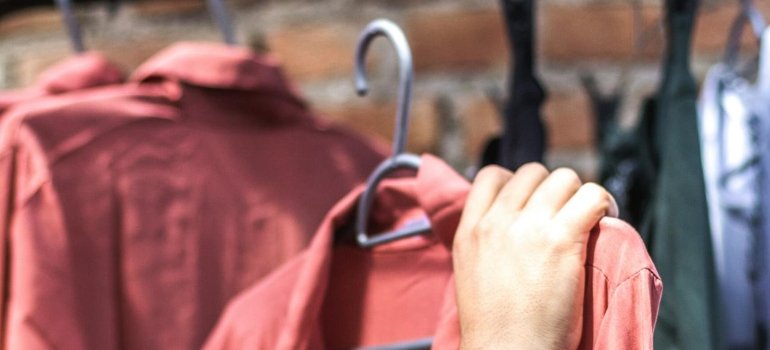
When packing clothes, wash the items you plan to move and make sure every piece is completely dry. Damp clothing can develop musty odors and mold when moisture remains trapped inside a box or bag. If anything becomes wet during the move:
- Remove it from the container immediately
- Spread it out in a dry, ventilated area
- Wash, air, or dry it within 24–48 hours
- Do not return it to a sealed box or closed closet while it is still damp
That’s why decluttering, washing, and sorting are so important. Donating or recycling clothes you no longer need lightens your load, while fresh laundry prevents odors during the move.
Sort the remaining clothing in a way that will make unpacking easier. Useful options include:
- Family member
- Destination bedroom
- Season
- Clothing category
- How soon the items will be needed
Each container should have a clear label. Include:
- The owner’s name
- The destination room
- The clothing category
- “Open first” when the contents will be needed immediately
Keep valuable and irreplaceable belongings with you rather than placing them in the moving truck. This includes jewelry, watches, prescription medication, and important personal accessories.
Prepare a clean packing area before you begin. Set out the following supplies:
- Moving boxes for folded clothing
- Wardrobe cartons for hanging garments
- Packing tape and labels
- Garment bags
- Protective tissue for delicate clothing
Fold clothing on a clean table, bed, or dry floor covering rather than on a damp floor or dirty carpet.
How to pack clothes for moving like a pro by type?
When packing clothes, match the container to the garment. Clothing that needs to remain upright belongs in a wardrobe box. Everyday folded clothes are better suited to suitcases, duffel bags, or smaller moving boxes. Dense garments should be divided among several containers rather than concentrated in one large box.
| Clothing and container | How to pack it | What to avoid |
|---|---|---|
| Formalwear Wardrobe box | Keep garments on hangers. Button shirts and zip jackets. | Compressing them into small boxes. |
| Casual clothes Suitcase, duffel, or box | Fold or roll items in compact groups. | Using oversized, half-empty boxes. |
| Heavy clothes Small or medium box | Divide jeans, hoodies, and coats among several boxes. | Loading every heavy item into one box. |
| Delicate clothing Protected sturdy box | Place clean muslin or acid-free tissue between layers. | Sharp folds or colored tissue. |
| Shoes Shoe box or small carton | Wrap pairs and keep soles away from clothing. | Placing uncovered shoes beside clean clothes. |
| Seasonal clothing Labeled storage container | Pack items only when fully clean and dry. | Sealing damp or valuable textiles in plastic. |
Suitcases and duffel bags work well for clothing you will need during the first three days after arrival. They are easy to carry and keep immediate-use items separate from the rest of the wardrobe.
Clear plastic bins are most useful for ordinary seasonal clothing. They offer protection from dust and minor moisture exposure. Avoid using them for valuable or moisture-sensitive textiles, especially for long-term storage. Condensation can become trapped inside an airtight container and damage the fabric.
Before loading any container:
- Check its printed weight limit
- Follow the assembly instructions
- Inspect the bottom and seams for damage
- Make sure it remains stable when lifted
- Divide the contents if one person cannot control it safely
Heavy garments should be spread across several small or medium boxes. This is especially important for jeans, thick coats, and dense sweatshirts. Placing all of them in one oversized carton can make the box difficult to lift and more likely to tear.
Regular moving boxes are versatile and cost-effective when they are sturdy and correctly sized. The top flaps should close flat without bulging or being forced down. Applying the same labeling and box-weight rules throughout the home also helps you efficiently pack for your move without mixing rooms or overloading containers.
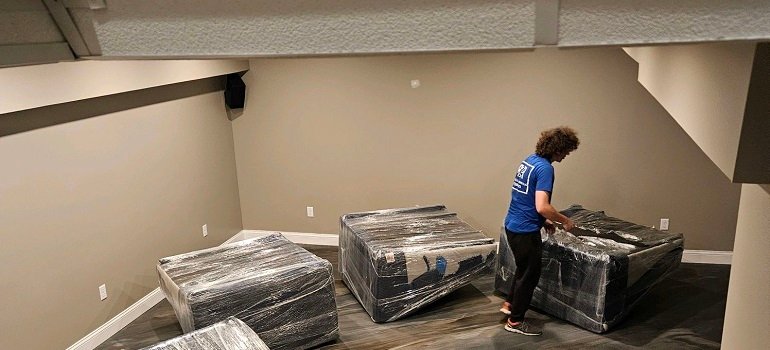
When combined, these methods give you flexibility and ensure your clothes arrive in excellent condition. For an easier process, you can also rely on a professional packing service in Cincinnati to handle everything with care.
How do you pack hanging and delicate clothes?
When packing clothes that wrinkle easily, keep wrinkle-prone garments on their hangers. This method works well for formalwear, work clothes, dresses, and structured jackets. Fasten each garment before loading the box so it is less likely to slip or become tangled.
Load a wardrobe box in this order:
- Assemble the box and secure the bottom
- Button, zip, or fasten each garment
- Lower the clothes carefully into the box
- Place each hanger on the metal bar
- Leave enough room for the garments to hang vertically
- Close the box without forcing clothing below the flaps
Keep footwear and liquids out of wardrobe boxes. Uncovered shoes can transfer dirt directly onto clean clothes. Toiletries and cleaning products can leak during transport.
Pack shoes separately using one of these methods:
- Original shoe boxes
- Fabric shoe bags placed inside a sturdy carton
- Small moving boxes with heavier pairs at the bottom
Some garments should be packed flat rather than left hanging. This includes:
- Heavy dresses
- Loose or fragile knits
- Delicate fabrics
- Clothing with beads, sequins, or heavy embellishments
The weight of these garments can pull on the shoulders, neckline, or seams during transport. Use a box large enough to avoid tight folds. Place clean muslin or neutral, unbuffered acid-free tissue between layers. Add extra tissue inside deep folds to reduce rubbing and creasing.
A clean garment bag can provide temporary protection during transportation. Avoid sealing valuable textiles in airtight plastic for long-term storage. If moisture becomes trapped inside:
- Remove the garment immediately
- Spread it out in a dry, ventilated area
- Wash or dry it within 24–48 hours
How can you save space without damaging clothes?
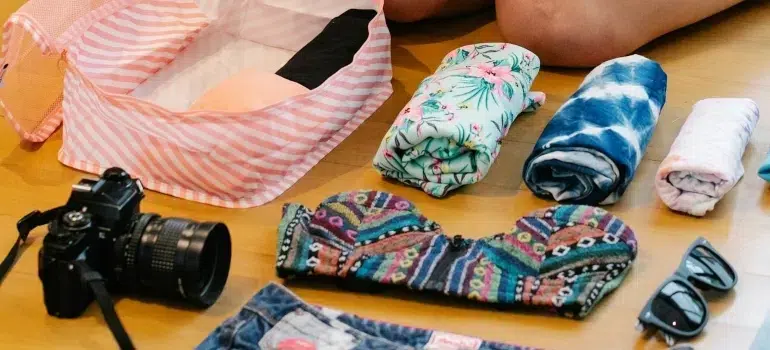
When packing clothes to save space, choose a method based on the fabric and shape of the garment. Flexible casual clothes can usually be rolled. Structured clothing should be folded or hung. Valuable textiles need extra room and protection.
- Rolling vs. folding – Roll flexible casual clothing into compact groups. T-shirts, leggings, workout wear, and pajamas usually respond well to this method. Fold structured shirts and pleated clothing instead. Sweaters that may stretch should also be folded. Rolling reduces unused space, but structured fabrics may still crease when compressed.
- Vacuum-seal bags – Use compression bags temporarily for bulky, washable items. Coats and blankets are usually suitable when they are completely dry. Avoid using these bags for delicate or valuable clothing. Leather, fur, fragile knits, and beaded formalwear need more breathable storage. Remove compressed clothing soon after arrival.
- Dresser drawers as storage – Lightweight clothing may remain in a sturdy dresser when the moving company approves it. Remove anything heavy, valuable, loose, or capable of leaking. Do not apply tape directly to finished wood. Use suitable stretch wrap around the furniture instead.
- Fill gaps with smaller items – Use clean, dry socks or undergarments to fill small spaces and limit movement. Scarves can also work when they are unlikely to snag. Do not force items into an already full box. The top flaps should close flat without bending or pressure.
Choose a box that fits the contents closely without crushing them. A half-empty box allows clothing to shift and may collapse when stacked. An overfilled box can split at the seams or distort structured garments. Pairing these methods with the right packing supplies Cincinnati gives you everything you need to stay organized.
What clothes should you keep with you on moving day?
When packing clothes for moving day, keep at least three days of clothing in a separate essentials bag. This bag should travel with you rather than in the moving truck. Pack more when you will be staying in a hotel or starting work or school immediately. You may also need extra clothing when laundry will not be available or delivery is expected later.
- Three complete everyday outfits
- Three sets of underwear and socks, plus one spare set
- One set of pajamas
- Work clothes, uniforms, or school clothing needed during the first three days
- One pair of comfortable moving-day shoes
- One weather-appropriate jacket or outer layer
- Toiletries and all prescription medication needed during the trip
- A phone charger and a separate bag for worn clothing
Keep the essentials bag in your personal vehicle, hotel room, or carry-on luggage. Do not load it into the moving truck. Place liquids in a separate leak-resistant toiletry bag so they cannot spill onto clothing.
Carry the following items with you rather than loading them onto the truck:
- Prescription medication
- Identification
- House and vehicle keys
- Important moving documents
- Your phone charger
Having these basics ready saves stress, keeps you comfortable, and helps you settle in faster while the rest of your wardrobe is still packed away. It’s a simple preparation step that not only keeps you organized but also shows you how to make moving less stressful.
How should you label and unpack clothes?
Every clothing container should show four key details:
- The owner’s name
- The destination bedroom
- The clothing category
- The unpacking priority
A label such as “Maya — Main Bedroom — Work Clothes — Open First” is far more useful than simply writing “Clothes.” It gives the movers a clear destination and shows you which box to open first.
Number the boxes assigned to each room. For example, write “Main Bedroom 1 of 4” on the first box. This makes it easier to identify a missing carton before the movers leave.
- Check the shipment inventory – Confirm that every numbered box and wardrobe carton has arrived. For an interstate move, compare the delivery against the shipment inventory. Record damaged or missing items before signing the final delivery paperwork.
- Keep the bill of lading – Store this document with your moving records. Keep it until the shipment has been delivered and all charges have been settled. Do not discard it while a damage or loss claim remains unresolved.
- Start with hanging clothes – Place wardrobe boxes beside the correct closet. Unpack formalwear and structured garments first. These pieces are more likely to wrinkle when left boxed for too long.
- Inspect for moisture – Remove any clothing that feels damp or smells musty. Wash or dry it within 24–48 hours. Do not place it in a closed closet or dresser.
- Refresh compressed items – Remove clothing from compression bags after arrival. Shake it out and allow it to air. Wash it when required by the care label before placing it into long-term storage.
Once every clothing box is empty, flatten cartons that are still sturdy and separate damaged materials. Any leftover packing materials can then be reused, donated, recycled, or discarded according to their condition.
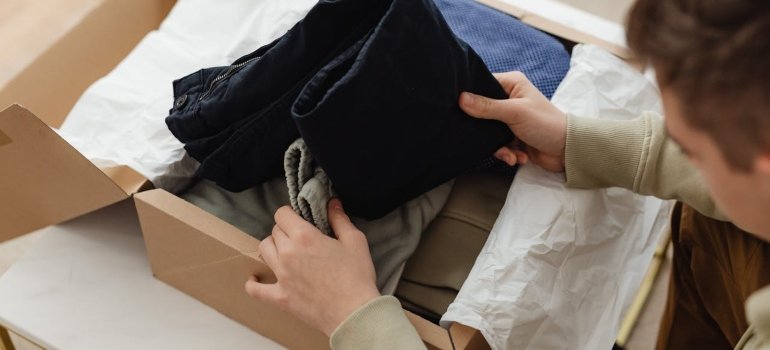
Staying organized is much easier when you’re also choosing the right moving company to place boxes in the correct rooms, giving you a head start on unpacking.
When should you use a professional packing service?
Professional packing support is especially useful for a large wardrobe or a short packing schedule. It can also help when formalwear or delicate textiles need careful handling. Families may benefit when clothing must remain separated by person and room.
Packing support is also practical when the correct materials are not already available. Delicate garments may require wardrobe cartons, protective tissue, or garment covers. A clear labeling system is equally important when several rooms are being packed at once.
Before booking packing help, confirm exactly what the written estimate includes:
- Whether boxes and packing materials are included in the price
- Whether the crew will handle formalwear and delicate garments
- Whether every box will be labeled by person and room
- Whether unpacking is included or charged separately
- Whether empty-box removal is part of the service
For an interstate move, keep copies of the following documents:
- The written estimate
- The order for service
- The bill of lading
- The shipment inventory
These documents record the agreed services, charges, contract terms, and shipment details. Keep them together in one accessible folder until the move is complete.
Pack your clothes like a pro—or by a pro!
The best way to pack clothes for moving combines the right materials with a clear labeling system. Ready 2 Roll Moving can provide suitable packing materials and organize clothing as part of a broader Cincinnati-area move. Professional help can reduce packing mistakes and keep wardrobes easier to identify at the destination. Clean, dry clothing and clearly labeled boxes are less likely to suffer avoidable damage during transport. Contact us to discuss your packing needs and request a personalized moving estimate.
Frequently asked questions and answers
Begin sorting and packing seasonal or rarely worn clothes about four to six weeks before moving day. Pack most everyday clothing during the final two weeks, leaving out only the outfits, workwear, and weather-appropriate items you still need.
Start with out-of-season clothing, special-occasion outfits, and anything you rarely wear. Pack daily clothing last so you do not need to reopen boxes before moving day.
A standard closet often requires approximately two or three wardrobe boxes, depending on how tightly the clothes hang and the size of each box. Check the hanging-bar length and avoid crowding garments together.
Heavy-duty bags can protect hanging clothes during a short, local move, but they tear easily and provide little structure. Wardrobe boxes are safer for long distances, formalwear, and garments that crease easily.
Keep clothes on hangers when possible, place folded items directly into suitcases and duffel bags, and sort only obvious donations. Label each container by person and room, then prepare one essentials bag before packing anything else.
Photograph valuable garments, designer pieces, and formalwear before packing them. Record their condition and keep receipts or appraisals with your moving documents. This creates a clearer record if an item is lost or damaged during the move.